Importance of FNSKU for Amazon Sellers
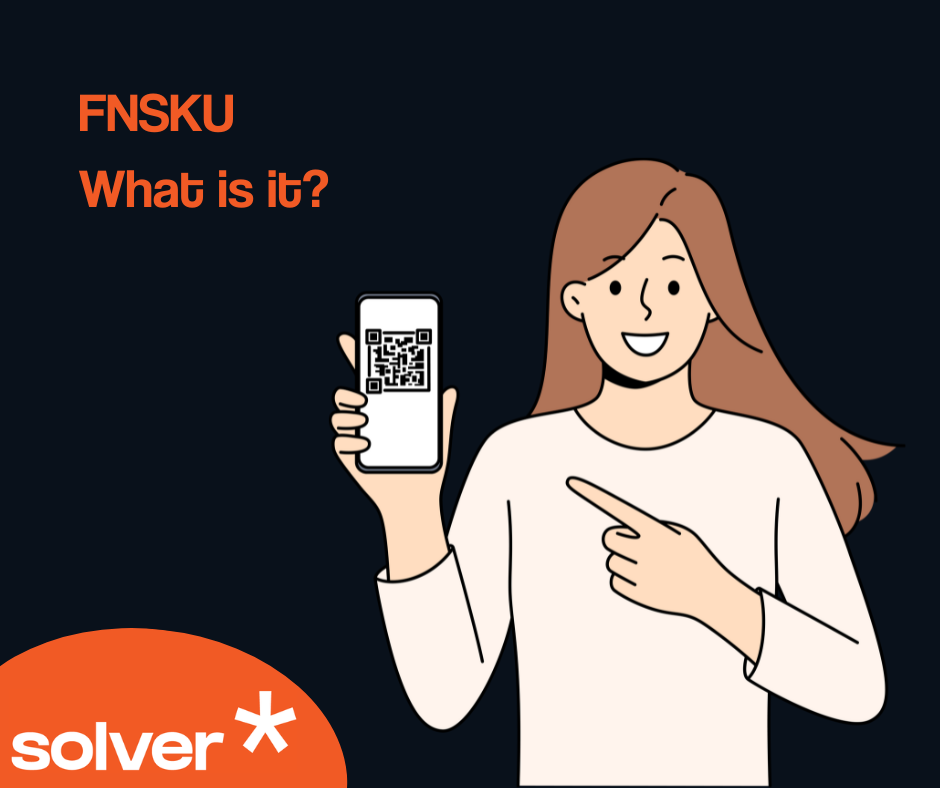
If you’ve ever pondered the difference between FNSKU and ASIN or been left scratching your head at a UPC mix-up, this guide is for you. Dive deep with us into the world of Amazon identifiers and emerge with a clear vision of navigating this essential part of your e-commerce journey.
FNSKU stands for Fulfillment Network Stock Keeping Unit, and it is an identifier used by Amazon to manage inventory in its warehouses. Amazon assigns a unique FNSKU to each product variant (for example, different sizes or colors of the same product will each have a different FNSKU), and this code is used to track the inventory of that specific product variant.
The FNSKU identifies your specific product as unique to your seller account and ensures that your inventory is kept separate from inventory belonging to other sellers. This is especially useful when you’re using the Fulfilled by Amazon (FBA) service, where Amazon handles storage, packaging, and shipping on your behalf.
When you list a new product on Amazon or convert an existing product to FBA, Amazon will assign it an FNSKU. You will need to label each unit of your product with its FNSKU barcode before sending your inventory to Amazon’s fulfillment centers. If you prefer, for a per-item fee, Amazon offers a service where they will apply the FNSKU labels for you.
In contrast, an ASIN (Amazon Standard Identification Number) is a unique block of 10 letters and/or numbers that identify items. While FNSKU is unique to the seller, ASIN is unique to the product itself, no matter who sells it.
It seems like some basic information many sellers already know, but some sellers sometimes misunderstand it.
Practical Case: The UPC Mix-Up
Jane had recently started her own furniture business. She was particularly proud of her line of ergonomic chairs, which she believed were both comfortable and stylish. Eager to tap into the vast market, she decided to list her chairs on Amazon using the Fulfilled by Amazon (FBA) service.
To do so, she bought a UPC (Universal Product Code) online, assuming it would simplify her listing process. With this UPC, she intended to generate an ASIN (Amazon Standard Identification Number) for her chairs. However, to her surprise, when she entered the UPC on Amazon, it was already linked to a completely unrelated product – a brand of lipstick.
Confused and frustrated, Jane reached out to Amazon support. They explained that UPCs need to be unique; in her case, the UPC she purchased had already been used by another seller. This meant she couldn’t use it to list her chairs.
However, she was introduced to the concept of GTIN Exemption. Since Jane had a Brand Registry, she was eligible to apply for this exemption, allowing her to list products without needing a unique UPC or EAN.
Jane promptly applied for the GTIN Exemption and was approved. She was provided an FNSKU specific to her seller account for her chairs. Using this, Jane could send her inventory to Amazon’s fulfillment centers with the assurance that her products would be kept distinct from others.
The experience taught Jane the importance of FNSKUs and how they can help when standard product identifiers, like UPCs, lead to complications. She also learned the value of understanding Amazon’s systems and processes and ensuring her business complied with their guidelines.
So please take your time to research such issues because it may eventually lead to some unpleasant circumstances, such as your account being suspended. If you have any questions regarding this, please contact us through the “Free Consultation” button on our main page. We will be happy to assist!